
As E-Scooter Injury Attorney: Navigating Liability for Sidewalk and Roadway Crashes takes center stage, this opening passage beckons readers with a crafted world of good knowledge, ensuring an absorbing and distinctly original reading experience.
In this article, we delve into the common types of injuries from e-scooter accidents, the legal framework surrounding these incidents, the role of e-scooter injury attorneys, and strategies for navigating liability.
E-Scooter Injuries Overview
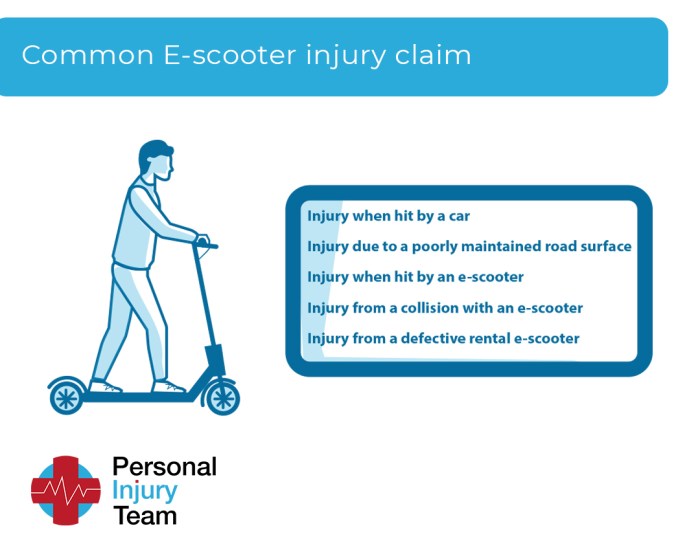
E-scooters have become a popular mode of transportation in urban areas, but along with their convenience comes a risk of accidents and injuries. These injuries can range from minor cuts and bruises to more serious fractures and head injuries.
Common Types of E-Scooter Injuries
- Fractures: Due to falls or collisions, riders can suffer fractures in their limbs or spine.
- Head Injuries: Not wearing a helmet can lead to traumatic brain injuries in the event of a crash.
- Road Rash: Abrasions and lacerations from skidding on pavement can result in painful road rash.
Prevalence of E-Scooter Injuries in Urban Areas
In recent years, there has been a significant increase in the number of e-scooter accidents in urban areas. According to a study by the Centers for Disease Control and Prevention (CDC), there were over 29,000 e-scooter-related injuries in the United States in 2019 alone.
Factors Contributing to the Rising Number of E-Scooter Accidents
- Increased Popularity: As e-scooters become more popular, the number of riders on the streets has also increased, leading to a higher likelihood of accidents.
- Lack of Regulation: Many cities have struggled to implement and enforce regulations for e-scooter use, leading to unsafe riding practices and higher risks of accidents.
- Distracted Riding: Just like with other forms of transportation, distractions such as texting or listening to music while riding can increase the chances of accidents.
Legal Framework for E-Scooter Accidents
In the realm of e-scooter accidents, understanding the legal framework is crucial to determining liability and fault in various scenarios. Let's delve into the laws and regulations governing e-scooter use on sidewalks and roadways, compare liability issues between e-scooter riders, pedestrians, and motorists, and analyze the challenges of determining fault in e-scooter accidents.
Laws and Regulations Governing E-Scooter Use
- E-scooter laws vary by state and city, with some allowing e-scooters on sidewalks and others restricting them to roadways.
- Many jurisdictions require e-scooter riders to follow the same rules as cyclists, including obeying traffic signals and yielding to pedestrians.
- Safety equipment requirements, such as helmets and lights, may also be mandated depending on the location.
Liability Issues Between E-Scooter Riders, Pedestrians, and Motorists
- E-scooter riders can be held liable for accidents if they violate traffic laws or fail to yield to pedestrians.
- Pedestrians may also share liability if they suddenly step into the path of an e-scooter without warning.
- Motorists are required to exercise caution around e-scooters and share the road responsibly to avoid collisions.
Challenges of Determining Fault in E-Scooter Accidents
- Proving fault in e-scooter accidents can be complex, as multiple factors such as speed, visibility, and right of way come into play.
- Witness statements, surveillance footage, and forensic analysis may all be needed to determine the sequence of events leading to the accident.
- The absence of clear-cut laws specifically addressing e-scooter accidents can further complicate the process of assigning fault.
Role of E-Scooter Injury Attorneys
E-Scooter injury attorneys play a crucial role in representing clients who have been injured in e-scooter accidents. They are responsible for navigating the legal complexities surrounding these cases and advocating for their clients' rights to fair compensation.
Responsibilities of E-Scooter Injury Attorneys
- Investigating the e-scooter accident thoroughly to determine liability.
- Gathering evidence such as witness statements, medical records, and accident reports.
- Negotiating with insurance companies to ensure fair settlements for their clients.
- Filing claims or lawsuits on behalf of the injured party.
Process of Filing a Claim or Lawsuit
- Initial consultation to assess the case and determine the best course of action.
- Filing a claim with the at-fault party's insurance company.
- If a fair settlement cannot be reached, proceeding to file a lawsuit in civil court.
- Navigating the legal process, including discovery, depositions, and potentially a trial.
Examples of Successful Cases
- An e-scooter rider injured due to a negligent driver was awarded a significant settlement after the attorney proved the driver's liability.
- In a case where a defective e-scooter caused an accident, the attorney successfully held the manufacturer accountable for the injuries sustained by their client.
Strategies for Navigating Liability
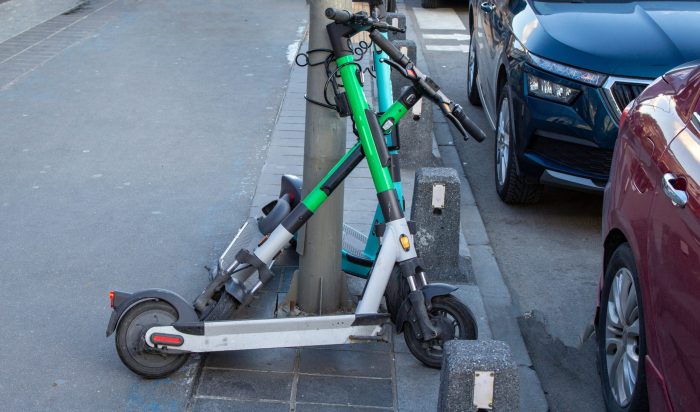
Determining liability for e-scooter accidents can be a complex process that requires careful examination of the circumstances surrounding the incident. Gathering evidence and witness testimonies is crucial in building a strong case for e-scooter injury claims. Additionally, exploring settlement options and negotiation strategies can help in reaching a fair resolution for all parties involved.
Steps Involved in Determining Liability
- Reviewing the traffic laws and regulations applicable to e-scooter use in the specific location where the accident occurred.
- Analyzing the actions of all parties involved, including the e-scooter rider, other motorists, pedestrians, and any other relevant individuals.
- Evaluating the condition of the e-scooter, the road, and any other environmental factors that may have contributed to the accident.
Importance of Gathering Evidence and Witness Testimonies
- Collecting photographic evidence of the accident scene, including any damages to the e-scooter, vehicles, or property.
- Obtaining medical records and documentation of injuries sustained as a result of the e-scooter accident.
- Securing witness testimonies to provide additional insight into the events leading up to the accident and to corroborate the injured party's account.
Settlement Options and Negotiation Strategies
- Exploring the possibility of reaching a settlement through negotiation with the at-fault party or their insurance company.
- Considering alternative dispute resolution methods, such as mediation or arbitration, to resolve the e-scooter accident claim outside of court.
- Seeking the guidance of an experienced e-scooter injury attorney to navigate the legal process and ensure the injured party's rights are protected throughout the settlement negotiations.
Summary
In conclusion, understanding the complexities of e-scooter accidents and the legal aspects surrounding them is crucial. Navigating liability in these cases requires expertise and a thorough understanding of the laws and regulations involved.
Common Queries
What are the common types of injuries associated with e-scooter accidents?
Common injuries include fractures, head injuries, sprains, and cuts.
How do e-scooter injury attorneys help clients in such cases?
E-scooter injury attorneys assist in filing claims, determining liability, and representing clients in legal proceedings.
What evidence is crucial in e-scooter injury cases?
Evidence such as medical records, witness testimonies, and accident reports play a vital role in determining liability.