
Beginning with PFAS "Forever Chemicals" Litigation: Suing for Water Contamination and Health Defects, the narrative unfolds in a compelling and distinctive manner, drawing readers into a story that promises to be both engaging and uniquely memorable.
As we delve deeper into the complexities of PFAS chemicals and their impact on water contamination and health defects, a clearer picture emerges of the challenges faced by individuals and communities affected by this issue.
Background of PFAS
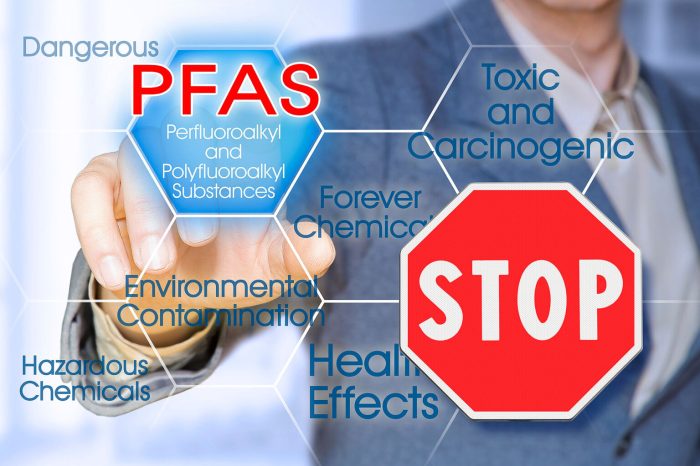
Per- and polyfluoroalkyl substances (PFAS) are a group of man-made chemicals that have been widely used in various consumer products and industrial applications due to their water and grease-resistant properties. These chemicals have been utilized in products like non-stick cookware, stain-resistant fabrics, firefighting foam, and more.
Environmental and Health Concerns
PFAS contamination has raised significant environmental and health concerns due to their persistence in the environment and potential adverse health effects on humans. These chemicals do not break down easily and can accumulate in the environment, leading to long-term contamination of water sources and soil.
Studies have linked PFAS exposure to various health issues, including cancer, thyroid disease, and immune system disorders.
Well-Known PFAS Chemicals
Two of the most well-known PFAS chemicals are perfluorooctanoic acid (PFOA) and perfluorooctanesulfonic acid (PFOS). These chemicals have been widely used in industrial processes and consumer products, contributing to widespread contamination in water sources and soil.
Forever Chemicals
PFAS chemicals earned the nickname "Forever Chemicals" due to their persistent nature in the environment. These chemicals do not break down easily and can remain in the environment for extended periods, posing long-term risks to human health and the ecosystem.
PFAS Water Contamination
PFAS contamination in water sources occurs mainly through industrial discharges, firefighting foam, landfills, and wastewater treatment plants. These "forever chemicals" have the ability to accumulate in water bodies over time, posing a significant threat to human health and the environment.
Impact on Drinking Water Quality
PFAS compounds can contaminate drinking water supplies, leading to serious health risks such as cancer, immune system disorders, and developmental issues. These chemicals are extremely persistent and can remain in the environment for a long time, further exacerbating the contamination of water sources.
- According to the Environmental Working Group (EWG), PFAS contamination has been detected in water supplies serving over 200 million Americans across 49 states.
- A study conducted in Michigan found that communities near military bases and industrial sites had significantly higher levels of PFAS in their drinking water.
- In Hoosick Falls, New York, residents were exposed to high levels of PFAS due to pollution from a local manufacturing plant, resulting in widespread health defects and concerns.
Challenges in Cleaning up PFAS-contaminated Water Sources
Cleaning up PFAS-contaminated water sources is a complex and costly process due to the chemical's resilience and widespread distribution. Traditional water treatment methods are often ineffective in removing PFAS compounds, making remediation efforts challenging and resource-intensive.
PFAS contamination is a pressing environmental issue that requires immediate attention and comprehensive action to protect public health and prevent further water pollution.
Health Effects of PFAS Exposure
PFAS exposure has been linked to a range of potential health risks, especially with long-term exposure. These forever chemicals have been associated with various health defects, including cancer, thyroid disease, and immune system issues.
Links between PFAS Exposure and Health Defects
- Studies have shown a correlation between PFAS exposure and an increased risk of cancer, particularly kidney and testicular cancer.
- Thyroid disease, such as hypothyroidism, has been linked to elevated levels of PFAS in the blood.
- Immune system issues, like reduced antibody response to vaccines, have also been observed in individuals exposed to PFAS.
Diagnosing Health Problems Related to PFAS Exposure
- One of the challenges in diagnosing health problems related to PFAS exposure is the lack of specific symptoms, as they can overlap with other conditions.
- Healthcare providers may need to conduct specialized tests to detect PFAS in the body and assess potential health impacts.
Regulatory Limits for PFAS in Drinking Water
Currently, the United States Environmental Protection Agency (EPA) has set a health advisory level of 70 parts per trillion (ppt) for PFOA and PFOS combined in drinking water.
- Some states have established their own, more stringent guidelines for PFAS levels in drinking water to protect public health.
- Ongoing research and monitoring are crucial to understanding the full extent of health risks associated with PFAS exposure and determining appropriate regulatory measures.
Litigation for Water Contamination
As the impact of PFAS contamination on water sources becomes more evident, legal action has been taken to hold responsible parties accountable for the pollution.
Notable Lawsuits Against Companies
Several lawsuits have been filed against major companies that are known to have discharged PFAS into the environment. For example, in 2018, the state of Minnesota sued 3M for $5 billion alleging that the company’s disposal of PFAS chemicals led to significant water contamination.
Governmental Accountability
Governmental bodies play a crucial role in enforcing regulations and holding polluters accountable for PFAS contamination. The Environmental Protection Agency (EPA) has set guidelines and standards for PFAS levels in water, and states have taken legal action to ensure compliance and protect public health.
Challenges in Seeking Compensation
Individuals and communities face various challenges when seeking compensation for health issues related to PFAS exposure. Proving causation between PFAS exposure and health effects can be difficult, as symptoms may take years to manifest. Additionally, legal processes can be time-consuming and costly, making it challenging for affected parties to pursue litigation against powerful corporations.
Compensation and Remediation Efforts
When it comes to individuals affected by PFAS contamination, there are various types of compensation available to help address the damages caused. Courts play a crucial role in determining liability in PFAS-related lawsuits, ensuring that responsible parties are held accountable for the harm inflicted.
Additionally, successful cases where communities have received compensation for PFAS damages serve as examples of justice being served. Remediation efforts are also essential to clean up PFAS-contaminated areas and restore the environment to a safe state.
Types of Compensation for PFAS Contamination
- Financial compensation for medical expenses related to PFAS exposure
- Property damage reimbursement for affected individuals
- Punitive damages to deter future misconduct by responsible parties
Court Determination of Liability in PFAS Lawsuits
- Courts consider evidence of contamination, negligence, and harm caused
- Responsible parties can include chemical manufacturers, industrial facilities, and government entities
- Rulings are based on legal principles and precedents in environmental law
Examples of Successful Compensation Cases
- The town of Hoosick Falls, NY, received a multi-million dollar settlement for PFAS water contamination
- Residents of Parkersburg, WV, affected by PFAS exposure from a local plant, were compensated for health damages
- A class-action lawsuit in Minnesota led to compensation for communities impacted by PFAS pollution
Remediation Efforts for PFAS Cleanup
- Treatment of contaminated water sources using advanced filtration technologies
- Soil remediation to remove PFAS chemicals from affected areas
- Long-term monitoring and management of environmental restoration efforts
Last Word
In conclusion, the discussion surrounding PFAS "Forever Chemicals" Litigation sheds light on the pressing need for accountability, compensation, and remediation efforts in the face of widespread water contamination and health risks. It is imperative that actions are taken to address these issues and safeguard the well-being of all those impacted by PFAS exposure.
FAQ Compilation
What are the common uses of PFAS chemicals?
PFAS chemicals are commonly used in products like non-stick cookware, food packaging, and firefighting foams due to their water and grease resistance properties.
What are the potential health risks associated with PFAS exposure?
Long-term exposure to PFAS has been linked to health defects such as cancer, thyroid disease, and immune system issues, posing serious risks to human health.
How do courts determine liability in PFAS-related lawsuits?
Courts typically consider factors like the level of contamination, negligence of the responsible party, and the extent of harm caused when determining liability in PFAS-related lawsuits.